Quick Summary:Core Drink Carriers are essential beverage packaging solutions designed for coffee shops, restaurants, and foodservice businesses that need reliable cup transportation. Made from molded pulp and plant-based fibers, these carriers provide stable support, lightweight handling, and sustainable packaging advantages. Buyers looking for molded pulp drink carriers should evaluate material quality, carrying performance, customization options, and supplier manufacturing capability before purchasing.
Why Core Drink Carriers Are Essential for Modern Beverage Packaging
In the fast-growing beverage industry, packaging plays a much bigger role than simply holding a product. For coffee shops, restaurants, delivery companies, and beverage brands, the ability to safely transport multiple drinks directly affects customer satisfaction and operational efficiency.
A customer ordering takeaway coffee expects the entire experience to be convenient. The beverage quality matters, but the packaging experience also matters. A weak or unstable carrier can create problems such as spilled drinks, damaged orders, and negative customer impressions.
This is why businesses increasingly rely on Core Drink Carriers as a practical foundation for beverage packaging systems. These carriers are designed to provide reliable cup support while offering advantages in sustainability, storage efficiency, and commercial usability.
For a busy coffee shop serving hundreds of takeaway orders daily, the drink carrier is not a minor accessory. It is a critical packaging component that helps employees handle orders faster and allows customers to transport beverages safely.
Modern beverage businesses usually evaluate carriers based on several factors:
- Cup stability and carrying performance
- Material sustainability
- Production consistency
- Storage and transportation efficiency
- Supplier reliability
The right packaging decision helps businesses reduce operational risks while improving customer experience. This is especially important for companies searching for Molded Pulp Drink Carriers for Coffee Shops that require sustainable solutions without sacrificing daily performance.
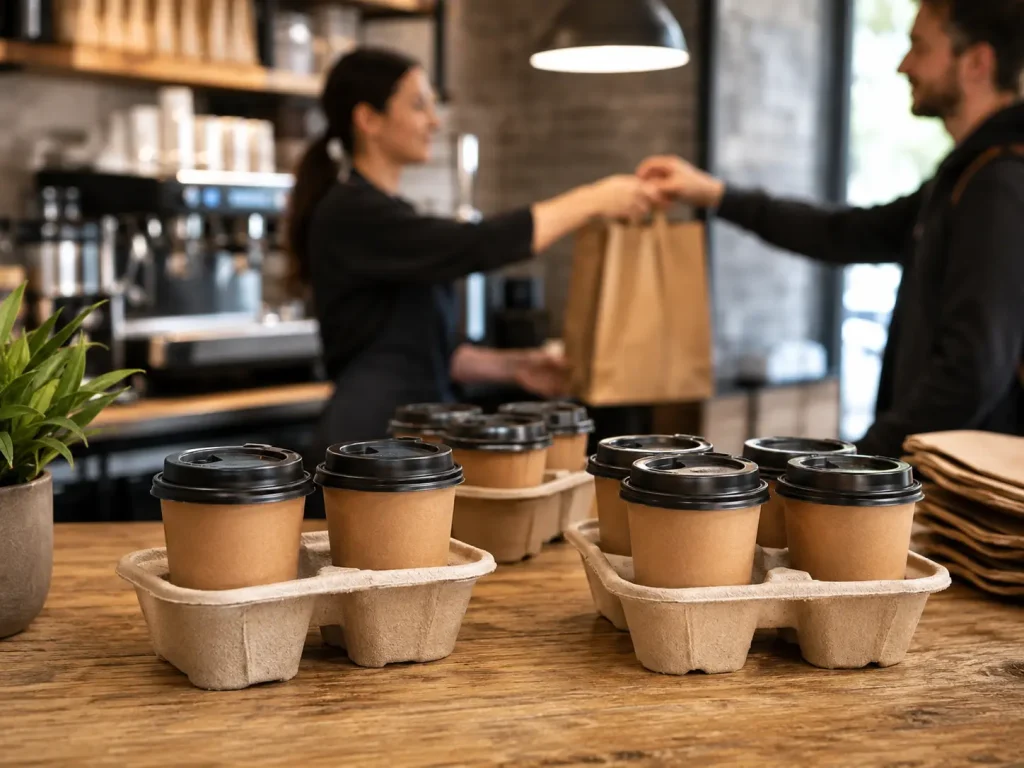
What Are Core Drink Carriers and How Do They Work?
Understanding the Basic Function of Core Drink Carriers
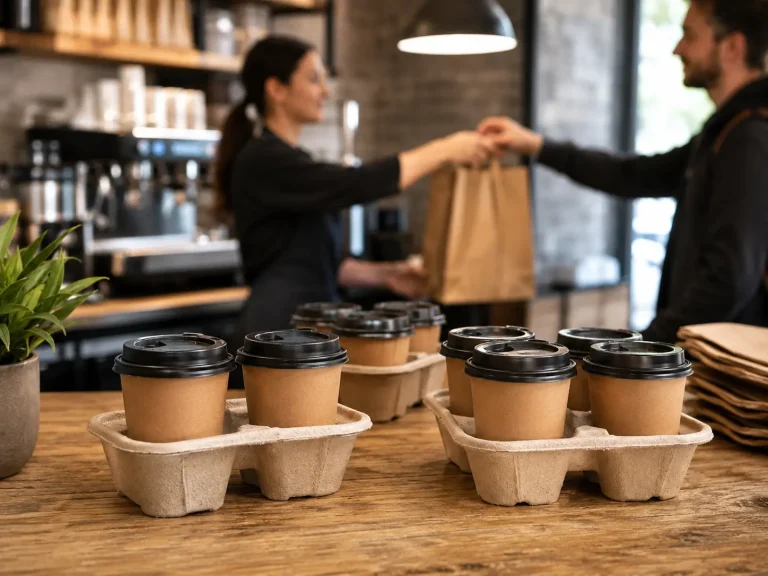
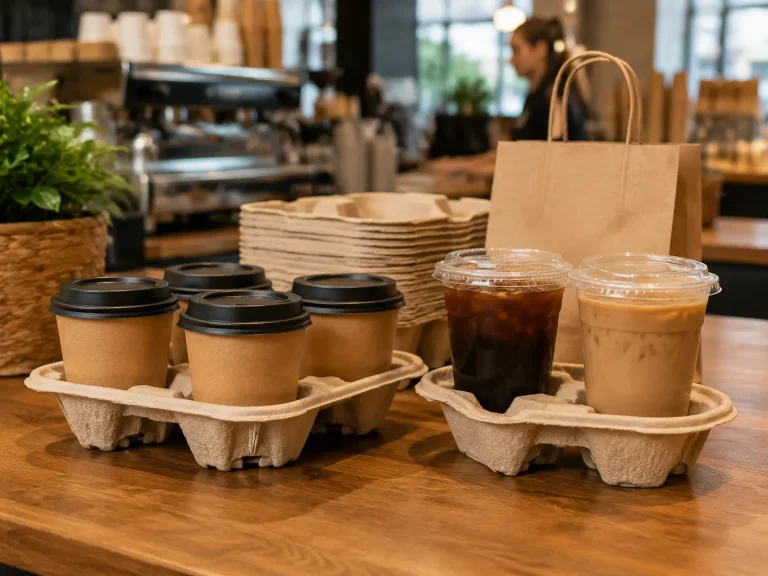
Core Drink Carriers are beverage holders designed to securely transport multiple cups at the same time. They are commonly used for coffee, tea, smoothies, soft drinks, and other takeaway beverages.
The primary functions include:
- Keeping cups separated and stable
- Reducing movement during transportation
- Improving carrying convenience
- Protecting beverages during delivery
In real-world applications, beverage carriers solve common problems faced by foodservice businesses.
For example, a customer ordering four coffees for an office meeting needs packaging that can handle multiple cup weights without bending or collapsing. Similarly, delivery drivers need carriers that remain stable during transportation.
A professional beverage packaging system should consider:
| Application Scenario | Main Packaging Requirement |
|---|---|
| Coffee Shop Takeaway | Easy handling and cup stability |
| Restaurant Delivery | Strong structure and transportation reliability |
| Catering Service | Multi-cup capacity and stacking efficiency |
| Beverage Distribution | Consistent quality and bulk supply capability |
Because different businesses have different requirements, choosing the correct carrier design is an important purchasing decision.
Why Molded Pulp Structure Is Widely Used for Drink Carriers
Molded pulp technology has become one of the most common solutions for sustainable beverage packaging because it combines strength, lightweight design, and renewable materials.
The manufacturing process usually includes:
- Fiber material preparation
- Pulp forming through specialized molds
- Drying and structural strengthening
- Quality inspection
- Packaging and shipment
Unlike simple folded paper products, molded pulp creates a three-dimensional structure. This allows manufacturers to design reinforced areas around cup holders, improving stability during transportation.
The advantages of molded fiber structures include:
- Lightweight construction
- Stackable storage design
- Efficient material usage
- Renewable material compatibility
- Flexible customization options
Businesses searching for molded fiber drink carriers often choose molded pulp solutions because they provide a balance between performance and sustainability.
Materials Used in Core Molded Pulp Drink Carriers
Recycled Paper Fiber
Recycled paper fiber is one of the most widely used materials in molded pulp packaging production. It provides a stable supply chain and is suitable for businesses requiring large-volume packaging.
Advantages include:
- Reliable material availability
- Cost-effective production
- Suitable for high-volume foodservice applications
- Compatible with sustainable packaging strategies
For large coffee chains and distributors, recycled fiber often provides a practical balance between performance and purchasing cost.
Sugarcane Bagasse Fiber
Sugarcane bagasse fiber is created from agricultural residue after sugar production. Instead of becoming waste, this material can be processed into useful packaging products.
Its popularity continues to grow because it supports renewable material strategies and aligns with the demand for compostable beverage carriers.
Foodservice businesses often select bagasse-based carriers because they combine sustainable sourcing with commercial packaging performance.
Bamboo and Other Plant Fiber Materials
Bamboo and mixed plant fibers are also used in sustainable packaging development. These materials are attractive for brands looking to emphasize renewable resources and environmentally responsible product choices.
| Material | Source | Strength Characteristics | Main Application |
|---|---|---|---|
| Recycled Paper Fiber | Recovered paper materials | Stable and reliable | Large-volume beverage packaging |
| Sugarcane Bagasse Fiber | Agricultural residue | Good molding performance | Foodservice packaging |
| Bamboo Fiber | Renewable bamboo resources | Strong fiber structure | Premium sustainable packaging |
| Mixed Plant Fiber | Multiple renewable sources | Adjustable performance | Customized packaging solutions |
The best material depends on business requirements. A high-volume distributor may prioritize supply stability, while a premium coffee brand may focus more on sustainability positioning.
For buyers evaluating packaging partners, understanding supplier experience and production capability is important. Companies should review a manufacturer’s background, technical ability, and quality systems before selecting a long-term partner through a professional molded pulp packaging manufacturer.
Key Performance Factors Buyers Should Evaluate Before Purchasing Core Drink Carriers
Selecting the right drink carrier requires more than checking the appearance of the product. Professional buyers need to evaluate how the carrier performs in real operating conditions, including beverage weight, transportation distance, storage requirements, and customer handling.
A reliable carrier should provide a balance between strength, weight, sustainability, and cost efficiency.
Cup Stability and Load Capacity
The primary purpose of Core Drink Carriers is to keep beverages stable during movement. Whether used in a coffee shop, restaurant, or delivery environment, the carrier must prevent cups from shifting or falling.
Important design factors include:
- Cup hole dimensions
- Structural reinforcement
- Fiber density
- Product thickness
- Overall carrier design
Different applications require different carrying capacities. A small café may only need a two-cup solution, while large beverage chains and delivery businesses may require four-cup structures.
| Performance Factor | Typical Range | Importance for Buyers |
|---|---|---|
| Cup Capacity | 2–4 cups | Determines application suitability |
| Product Weight | 15–40 grams | Balances transportation efficiency and strength |
| Compression Strength | 20–40N depending on design | Prevents deformation during use |
| Material Thickness | Customized according to structure | Influences durability |
| Stacking Efficiency | High-volume storage capability | Reduces warehouse requirements |
For businesses purchasing large quantities, consistent performance is more valuable than choosing the lowest-cost option.
If your business handles multiple beverage orders every day → choose a carrier design tested for the actual cup quantity and transportation conditions.
Moisture Resistance and Beverage Compatibility
Beverage packaging must perform under both hot and cold conditions. Different drinks create different challenges.
Hot beverages such as coffee and tea require:
- Stable structure
- Comfortable handling
- Heat-resistant design considerations
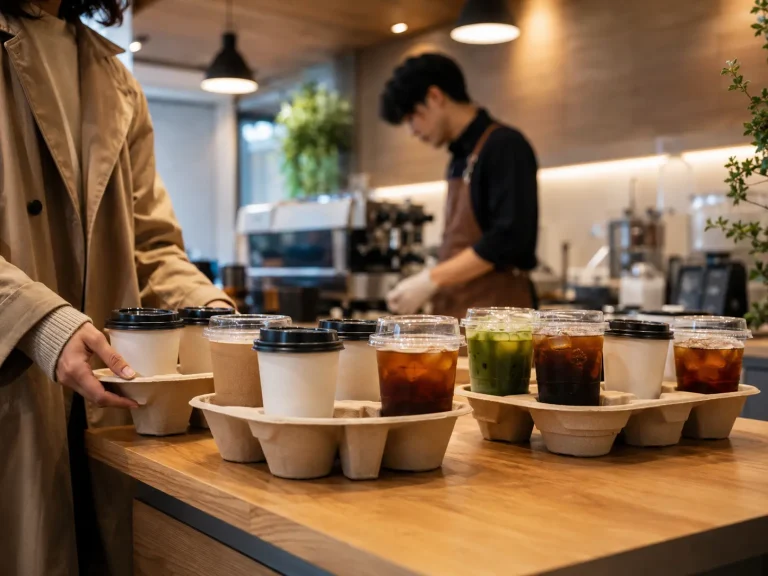
Cold beverages such as iced coffee, smoothies, and juice require additional attention because condensation may affect packaging performance.
A common purchasing mistake is selecting a carrier based only on dry testing. Real-world applications involve moisture, temperature changes, and transportation movement.
| Beverage Type | Main Challenge | Recommended Consideration |
|---|---|---|
| Hot Coffee | Heat and beverage weight | Strong support structure |
| Iced Coffee | Condensation | Improved moisture performance |
| Smoothies | Large cup sizes | Customized cup compatibility |
| Mixed Beverage Orders | Different cup dimensions | Flexible carrier design |
If your business focuses on cold beverage delivery → choose molded fiber carriers designed for improved moisture resistance and transportation stability.
Stackability and Transportation Efficiency
For commercial buyers, packaging efficiency affects more than product handling. It also influences warehouse space, shipping costs, and inventory management.
Stackable drink carriers provide several advantages:
- Reduced storage volume
- Lower transportation requirements
- Improved warehouse organization
- Faster employee handling
For distributors purchasing thousands or millions of units annually, small improvements in stacking efficiency can create significant operational benefits.
Core Drink Carriers Compared With Other Beverage Packaging Options
Core Drink Carriers vs Plastic Cup Holders
Plastic beverage holders were traditionally popular because of their low manufacturing cost and lightweight characteristics. However, environmental concerns and changing regulations are encouraging businesses to explore fiber-based alternatives.
| Comparison Factor | Molded Pulp Core Drink Carriers | Plastic Cup Holders |
|---|---|---|
| Material Source | Plant-based fiber materials | Petroleum-based plastics |
| Sustainability Position | Supports renewable packaging strategies | Increasing environmental concerns |
| Customer Perception | Natural and eco-conscious | Traditional packaging image |
| Customization | Flexible molded designs | More limited structure options |
| Application | Coffee shops, restaurants, sustainable brands | General beverage transportation |
For businesses focusing on sustainability, switching from plastic to molded pulp solutions can support environmental messaging while maintaining practical performance.
However, companies should consider local recycling and disposal systems before making final decisions.
If sustainability goals are important and the business requires professional beverage packaging performance → choose certified fiber-based drink carriers.
Core Drink Carriers vs Paperboard Drink Holders
Paperboard carriers are another common solution. They are usually affordable and lightweight but may have different structural characteristics compared with molded pulp designs.
| Feature | Molded Pulp Carrier | Paperboard Carrier |
|---|---|---|
| Structure | Three-dimensional molded design | Folded flat-sheet structure |
| Cup Support | Higher structural stability | Depends on folding design |
| Customization | High design flexibility | Moderate flexibility |
| Durability | Better support for multiple cups | Suitable for lighter applications |
For businesses handling large takeaway volumes, molded pulp designs often provide better reliability because the structure is created specifically around cup positioning.
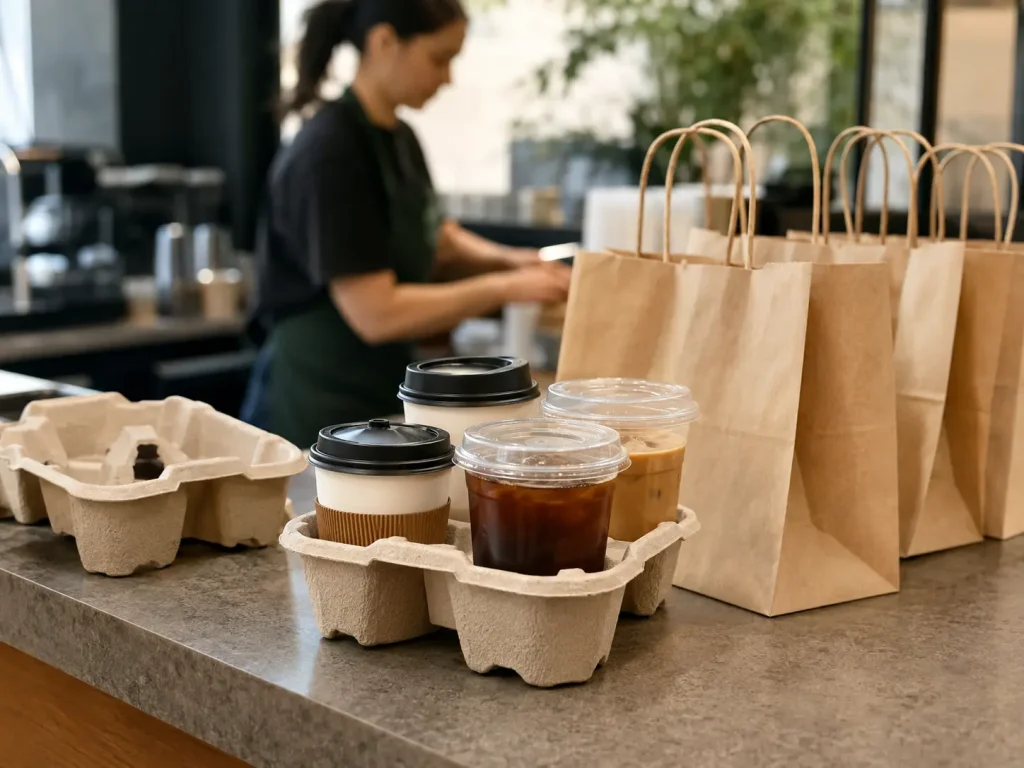
How Different Businesses Should Choose Core Drink Carriers
Choosing Carriers for Small Coffee Shops
Independent coffee shops usually focus on balancing cost, customer experience, and sustainability.
Typical requirements include:
- Daily takeaway convenience
- Reliable cup holding
- Simple inventory management
- Reasonable purchasing cost
If a coffee shop has moderate beverage volume and mainly serves local customers → choose standard molded pulp carriers with proven compatibility.
The priority should be reliability and customer convenience rather than unnecessary customization.
Choosing Carriers for Coffee Chains and Franchise Brands
Large beverage chains need consistent packaging across multiple locations. Even small differences in carrier quality can affect customer experience.
Important requirements include:
- Stable production capacity
- Consistent dimensions
- Custom branding support
- Long-term supply reliability
If a business operates multiple stores and requires consistent packaging quality → choose an OEM supplier with manufacturing capability.
Companies looking for custom molded fiber drink carriers manufacturer solutions should evaluate supplier experience, mold development ability, and quality management systems.
Choosing Carriers for Foodservice Distributors
Wholesale buyers usually require different priorities because they support multiple customers and industries.
Key considerations include:
- Bulk production capacity
- Competitive pricing
- Reliable delivery schedules
- Multiple product options
If purchasing volume is high and supply stability is critical → choose a wholesale drink carrier supplier with factory-level production ability.
Core Drink Carrier Design Options for Different Beverage Applications
Different beverage businesses require different packaging structures. A small coffee shop may prioritize flexibility and storage efficiency, while a large restaurant chain may focus on carrying capacity and transportation reliability.
Choosing the right structure helps businesses improve operational efficiency and reduce packaging risks.
One-Piece Four Cup Carriers for High-Volume Beverage Transportation
For businesses handling multiple beverage orders, a four-cup carrier design provides a practical solution for improving order handling efficiency.
A one-piece structure offers several advantages:
- Integrated design for improved stability
- Easy handling for employees and customers
- Suitable for multiple beverage transportation
- Efficient stacking during storage
Coffee chains, catering companies, and delivery-focused businesses often require higher-capacity solutions because customers frequently order multiple drinks at once.
For example, an office coffee order may include four different beverages with different sizes and temperatures. A stable structure helps prevent movement and improves delivery reliability.
Businesses that require higher capacity solutions can evaluate a one-piece 4 cup pulp carrier designed for commercial beverage transportation requirements.
| Application | Recommended Carrier Type | Main Benefit |
|---|---|---|
| Coffee Chain Orders | Four Cup Carrier | Supports multiple beverage handling |
| Office Beverage Delivery | Four Cup Carrier | Improves transportation stability |
| Catering Services | High-capacity carrier | Reduces handling difficulty |
Tearable Two Cup Carriers for Flexible Beverage Service
Not every order requires a large multi-cup solution. Many coffee shops and restaurants need flexible packaging that can adapt to smaller orders.
Two-cup carriers are useful for:
- Individual customer purchases
- Small takeaway orders
- Quick-service restaurants
- Mobile beverage sales
A tearable design allows businesses to separate sections when needed, improving packaging flexibility and reducing unnecessary material usage.
For businesses that require adaptable packaging formats, a tearable 2 cup pulp carrier can provide a practical option for different beverage quantities.
| Feature | Business Advantage |
|---|---|
| Two-Cup Capacity | Suitable for smaller takeaway orders |
| Tearable Structure | Allows flexible usage |
| Lightweight Design | Reduces material consumption |
| Stackable Format | Improves storage efficiency |
Common Mistakes When Purchasing Core Drink Carriers
Many buyers focus heavily on unit price when selecting packaging products. However, professional procurement teams understand that packaging decisions affect operating costs, customer satisfaction, and brand reputation.
The cheapest option is not always the most economical choice.
Mistake 1: Choosing Only Based on Purchase Price
A low-cost carrier may appear attractive during initial purchasing discussions, but poor performance can create hidden expenses.
Potential problems include:
- Broken carriers during transportation
- Customer complaints
- Product replacement costs
- Negative brand impressions
A professional buyer should evaluate total value instead of only the initial product price.
The real cost includes:
| Cost Factor | Possible Impact |
|---|---|
| Product Failure | Additional replacement expenses |
| Delivery Issues | Customer dissatisfaction |
| Unstable Quality | Operational difficulties |
| Poor Supplier Reliability | Business disruption |
Mistake 2: Ignoring Cup Compatibility Testing
Different beverage brands use different cup sizes, shapes, and materials. A carrier designed for one application may not perform well in another.
Before purchasing, businesses should test:
- Cup diameter
- Cup height
- Beverage weight
- Hot and cold conditions
- Transportation environment
A common failure occurs when buyers select a carrier based on general specifications without testing actual products.
If your business uses customized cups or multiple beverage sizes → choose suppliers that can provide product testing and customization support.
Mistake 3: Selecting Suppliers Without Manufacturing Capability
A supplier’s manufacturing capability directly affects quality consistency and delivery reliability.
Businesses should evaluate:
- Production equipment
- Factory capacity
- Quality control procedures
- Material sourcing capability
Working with suppliers without production control may result in:
- Inconsistent product dimensions
- Delayed shipments
- Limited customization ability
- Difficult communication during product development
For long-term purchasing relationships, buyers should prioritize suppliers with proven manufacturing experience.
How to Select a Reliable Core Drink Carriers Manufacturer
Evaluate Factory Production Capability
A professional manufacturer should have the ability to manage the complete production process from material preparation to final inspection.
Important evaluation factors include:
| Evaluation Area | Why It Matters |
|---|---|
| Production Capacity | Ensures stable supply for large orders |
| Mold Development | Supports customized packaging solutions |
| Quality Management | Maintains product consistency |
| Material Control | Improves sustainability and reliability |
Companies searching for a Core Drink Carriers manufacturer should review whether the supplier can support both current requirements and future product development.
Review Quality Testing Standards
Reliable beverage packaging manufacturers usually perform multiple inspections before shipment.
| Testing Method | Purpose |
|---|---|
| Compression Testing | Measures structural strength |
| Dimension Testing | Ensures cup compatibility |
| Moisture Testing | Evaluates beverage protection |
| Appearance Inspection | Maintains consistent quality |
Consider OEM and Custom Development Ability
For growing beverage brands, customization can create competitive advantages.
OEM support may include:
- Custom molds
- Different cup configurations
- Brand-specific designs
- Packaging optimization
A manufacturer with strong development ability can help businesses create packaging solutions that better match their operational needs.
Sustainability Trends Affecting the Future of Beverage Packaging
The Global Shift Toward Fiber-Based Packaging Solutions
The beverage packaging industry is experiencing a significant transition as businesses, consumers, and governments place greater emphasis on sustainability. Traditional plastic packaging is facing increasing pressure due to waste management challenges and environmental concerns.
As a result, fiber-based packaging solutions are becoming more widely adopted by coffee shops, restaurants, and beverage brands.
The growth of molded pulp packaging is driven by several market factors:
- Increasing restrictions on single-use plastics
- Growing consumer demand for sustainable products
- Corporate ESG commitments
- Need for renewable packaging materials
- Development of circular economy strategies
For businesses, sustainability is no longer only an environmental decision. It has become a competitive advantage that influences customer trust, brand reputation, and market positioning.
| Industry Trend | Impact on Beverage Packaging Buyers |
|---|---|
| Plastic Reduction Policies | Increase demand for fiber-based alternatives |
| Sustainable Brand Positioning | Encourage eco-friendly packaging adoption |
| Supply Chain Transparency | Require better supplier evaluation |
| Foodservice Growth | Create demand for reliable packaging solutions |
Future Development of Molded Pulp Drink Carrier Technology
Future beverage packaging development will focus on improving both environmental performance and practical functionality.
Key development directions include:
- Higher-performance plant fiber materials
- Improved moisture resistance
- More customized structural designs
- Better manufacturing efficiency
- Greater supply chain transparency
For beverage businesses, choosing suppliers with continuous improvement capability will become increasingly important.
Companies that build relationships with experienced manufacturers can adapt faster to changing market requirements and customer expectations.

Final Recommendation: Choosing the Right Core Drink Carriers for Long-Term Packaging Success
Core Drink Carriers may appear to be a simple packaging component, but they play an important role in beverage transportation, customer experience, and brand reputation.
For professional buyers, the best purchasing decision should consider more than price. A reliable carrier should provide:
- Stable cup support
- Suitable material performance
- Efficient storage and transportation
- Reliable manufacturing quality
- Long-term supplier support
The correct selection process should follow these steps:
| Decision Step | Buyer Action |
|---|---|
| 1. Define Application | Identify beverage type, volume, and transportation conditions |
| 2. Evaluate Materials | Compare fiber options and sustainability requirements |
| 3. Test Performance | Check cup compatibility and real usage conditions |
| 4. Select Supplier | Choose manufacturers with quality control and production capability |
For businesses looking to improve beverage packaging performance, selecting the right Core Drink Carriers solution can help create a safer, more efficient, and more sustainable customer experience.
Frequently Asked Questions About Core Drink Carriers
1. What are Core Drink Carriers and why are they important for beverage businesses?
Core Drink Carriers are practical beverage packaging solutions designed to hold and transport multiple cups safely. They help coffee shops, restaurants, and foodservice companies improve order handling efficiency, reduce beverage movement during transportation, and provide customers with a more convenient takeaway experience. A well-designed carrier also helps reduce packaging-related problems such as spills and damaged drinks.
2. Are molded pulp drink carriers environmentally friendly?
Molded pulp drink carriers are generally considered a sustainable packaging option because they are produced from renewable fiber materials such as recycled paper, sugarcane bagasse, and plant-based fibers. However, environmental performance depends on material composition, manufacturing methods, certifications, and local disposal systems. Businesses should confirm supplier information before making purchasing decisions.
3. How many cups can Core Drink Carriers hold?
The capacity of Core Drink Carriers depends on product design and application requirements. Common commercial designs include two-cup and four-cup configurations. Small coffee shops may prefer flexible two-cup options, while beverage chains, catering companies, and delivery businesses often require higher-capacity carriers for multiple drink orders.
4. Are molded fiber drink carriers suitable for hot and cold beverages?
Yes, molded fiber drink carriers can be used for both hot and cold beverages when properly designed. Hot drinks require strong structural support and comfortable handling, while cold drinks require consideration of condensation and moisture resistance. Businesses should test carriers with their actual beverage cups before placing large production orders.
5. How should businesses choose a reliable Core Drink Carriers supplier?
Businesses should evaluate suppliers based on manufacturing capability, quality control systems, customization support, production capacity, and delivery reliability. A professional supplier should provide samples, technical information, and production support. Choosing a supplier based on long-term value instead of only price helps reduce quality risks and improves packaging consistency.
References
- Packaging and the Circular Economy: Opportunities and Challenges — Ellen MacArthur Foundation
- Sustainable Packaging Coalition: Definition of Sustainable Packaging — GreenBlue Organization
- EN 13432 Packaging Requirements for Compostability and Recoverability — European Committee for Standardization (CEN)
- ASTM D6400 Standard Specification for Compostable Plastics — ASTM International
- Single-Use Plastics and Sustainable Alternatives Report — United Nations Environment Programme (UNEP)
- The Future of Packaging: Sustainable Materials and Market Development — Smithers Packaging Research
- Sustainability in Packaging: Consumer Expectations and Industry Trends — McKinsey & Company
- Food Packaging: Principles and Practice — Gordon L. Robertson, CRC Press
Understanding the Complete Value of Core Drink Carriers
What are Core Drink Carriers?
Core Drink Carriers are essential beverage packaging components designed to improve transportation safety, customer convenience, and operational efficiency. They provide a practical solution for businesses that need reliable cup handling while supporting sustainable packaging goals.
Why are molded pulp carriers becoming more popular?
Businesses are increasingly adopting molded pulp solutions because they combine renewable materials with practical performance. Growing environmental awareness, plastic reduction policies, and customer expectations are accelerating demand for fiber-based beverage packaging.
How should buyers choose the right carrier?
The correct choice depends on application requirements. Small coffee shops may need flexible two-cup solutions, while beverage chains and delivery businesses may require stronger multi-cup structures. Buyers should evaluate material, capacity, testing performance, and supplier capability.
What options should businesses consider?
Different designs serve different purposes. Four-cup carriers are suitable for large beverage orders and commercial delivery, while two-cup flexible designs are suitable for smaller takeaway situations. Selecting the right structure improves efficiency and customer experience.
What should buyers consider before purchasing?
Businesses should avoid choosing carriers only based on price. Product quality, supplier reliability, customization ability, and long-term supply stability directly affect operational success.
For beverage brands, restaurants, and foodservice companies, investing in the right Core Drink Carrier solution creates value beyond packaging. It supports safer transportation, stronger customer experiences, and sustainable business development.