


30-Count Molded Pulp Egg Carton for Bulk Egg Packaging
|
|
|
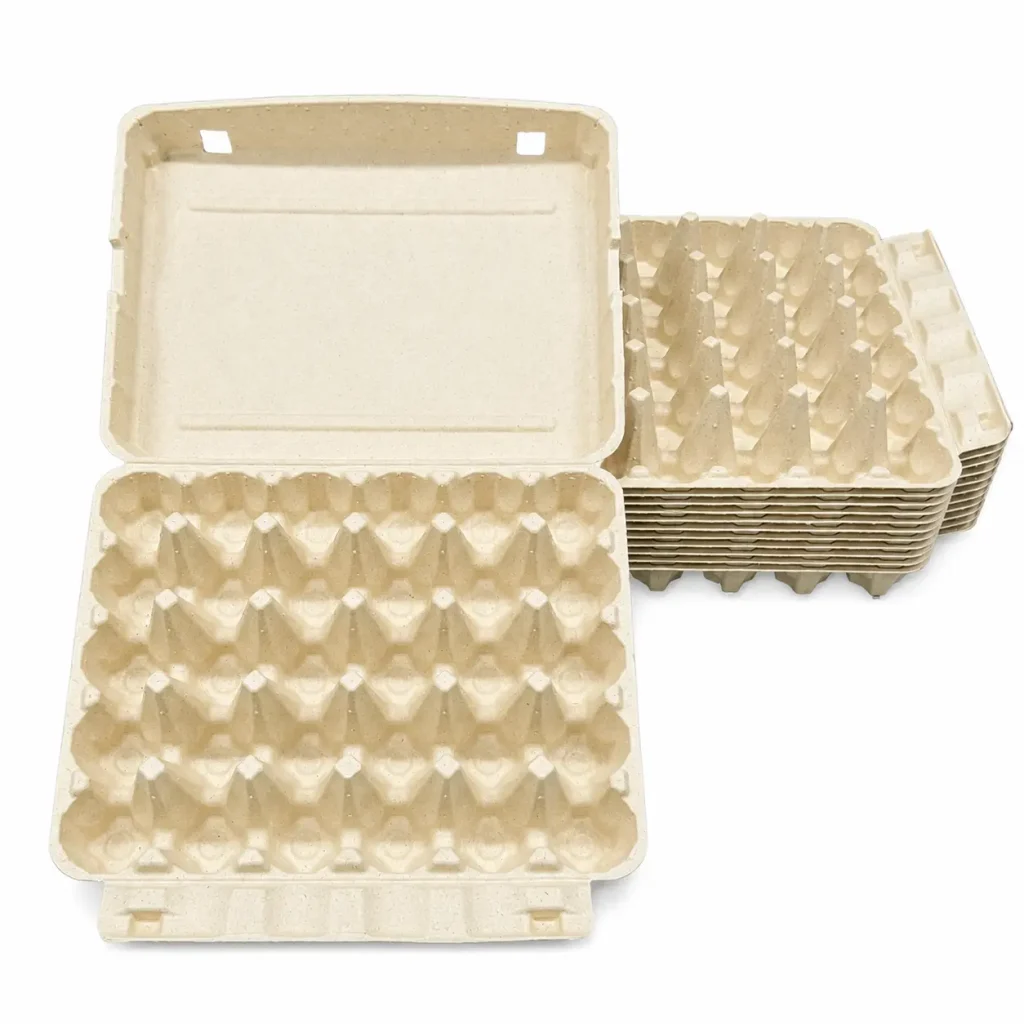
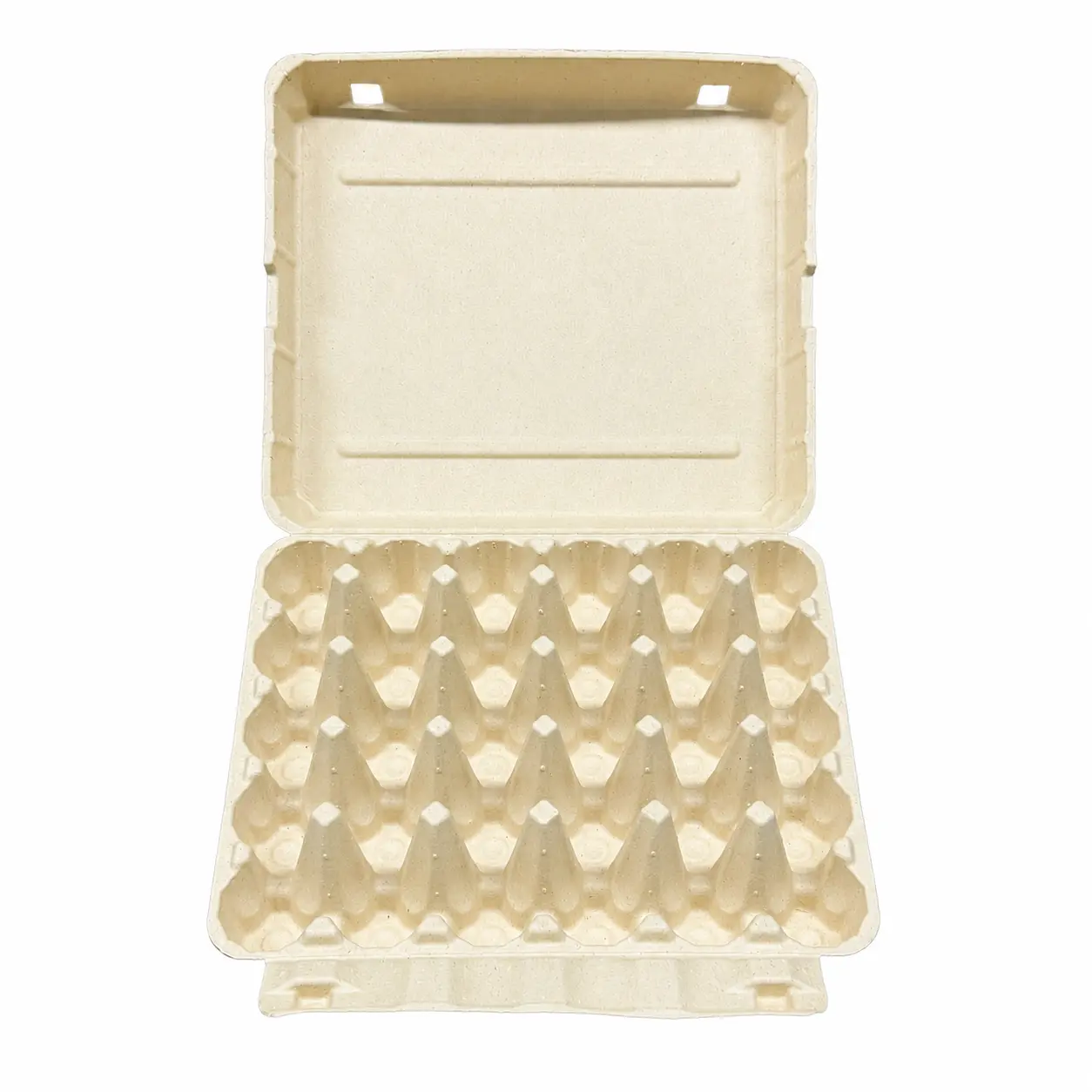
King Green Pack (KGP) supplies the 30-count molded pulp egg carton for commercial egg farms, grading and packing stations, wholesalers, distributors, foodservice supply chains, and bulk egg packaging projects. This large-capacity lidded carton is designed to organize thirty eggs in individual molded compartments while helping protect them during packing, warehouse storage, handling, transportation, and distribution.
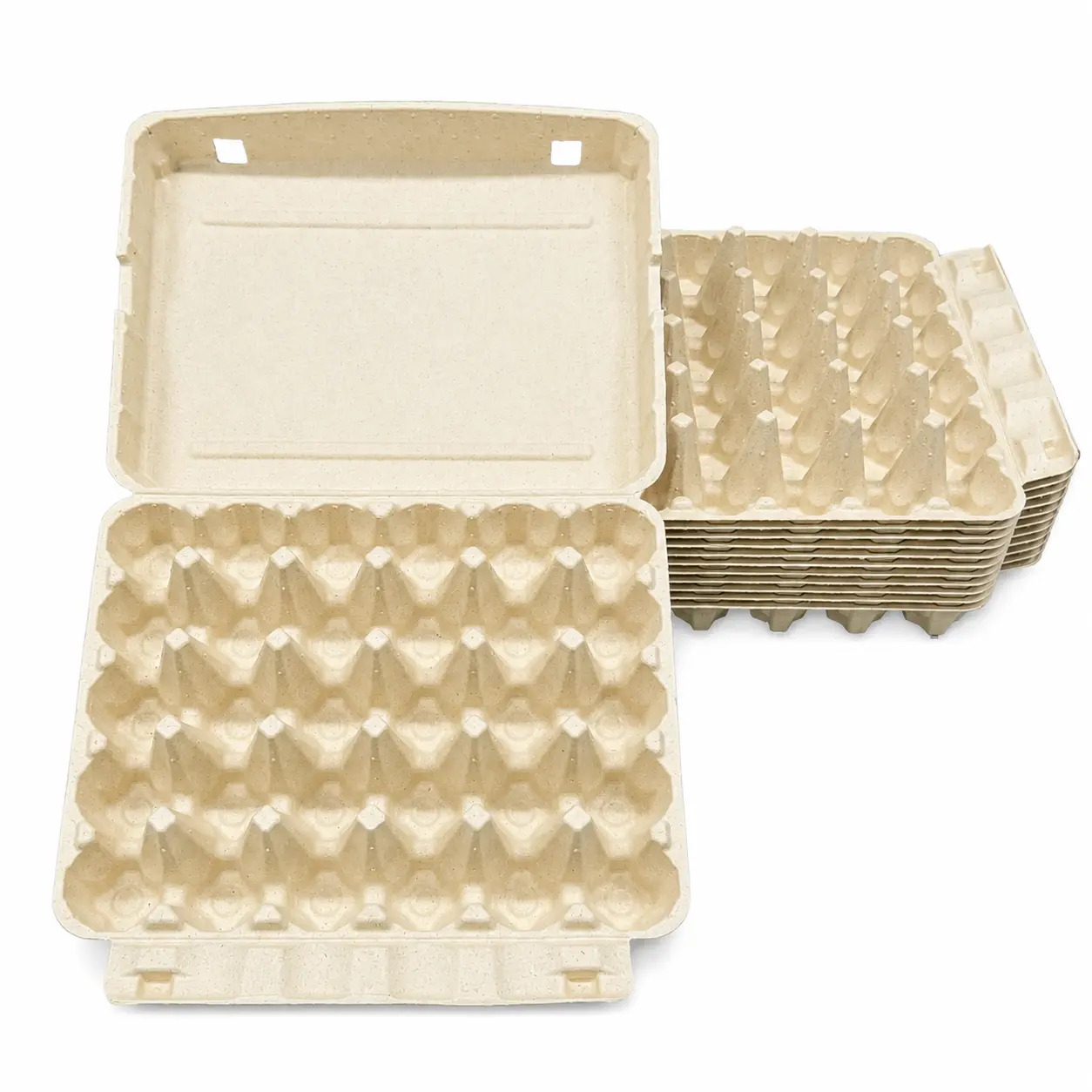
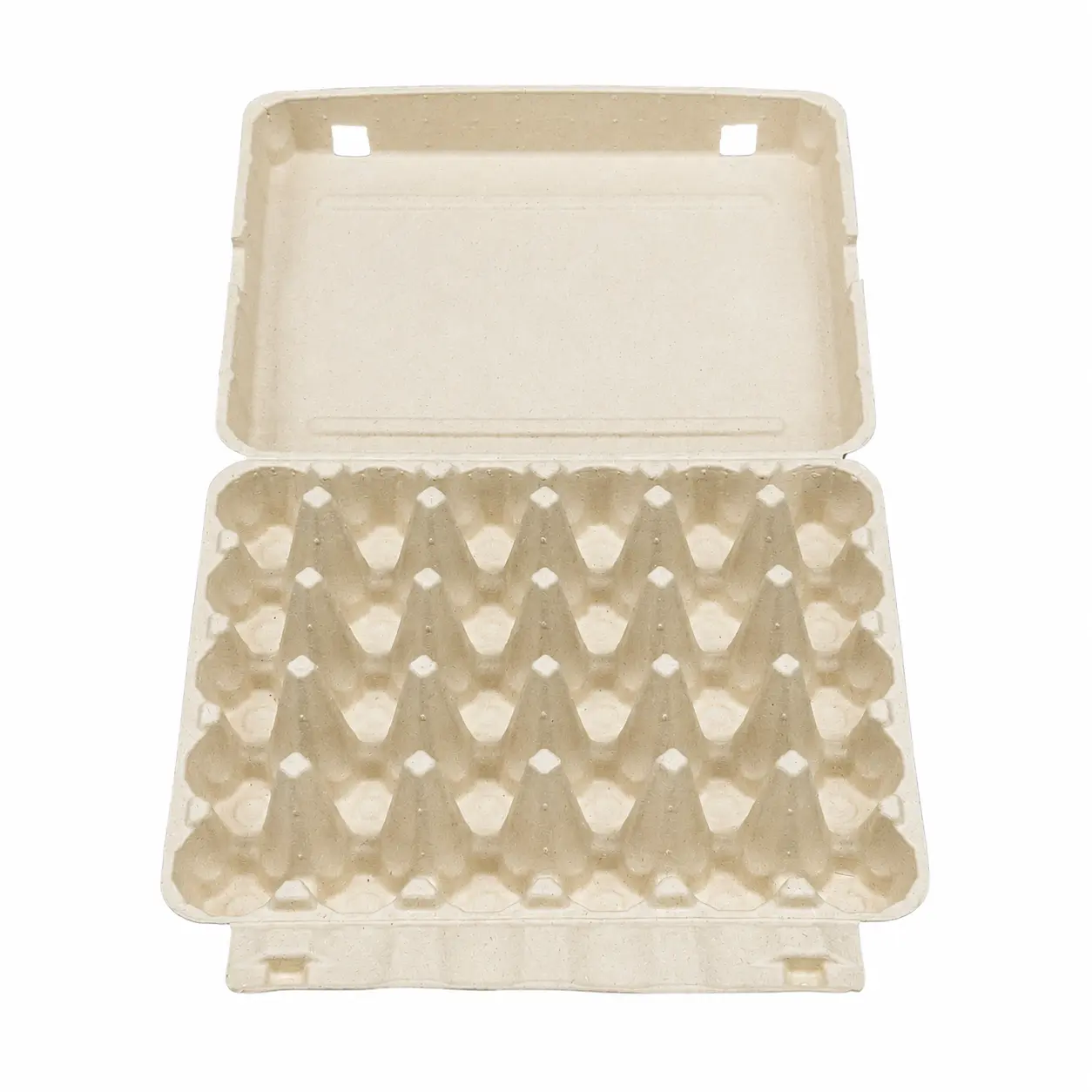
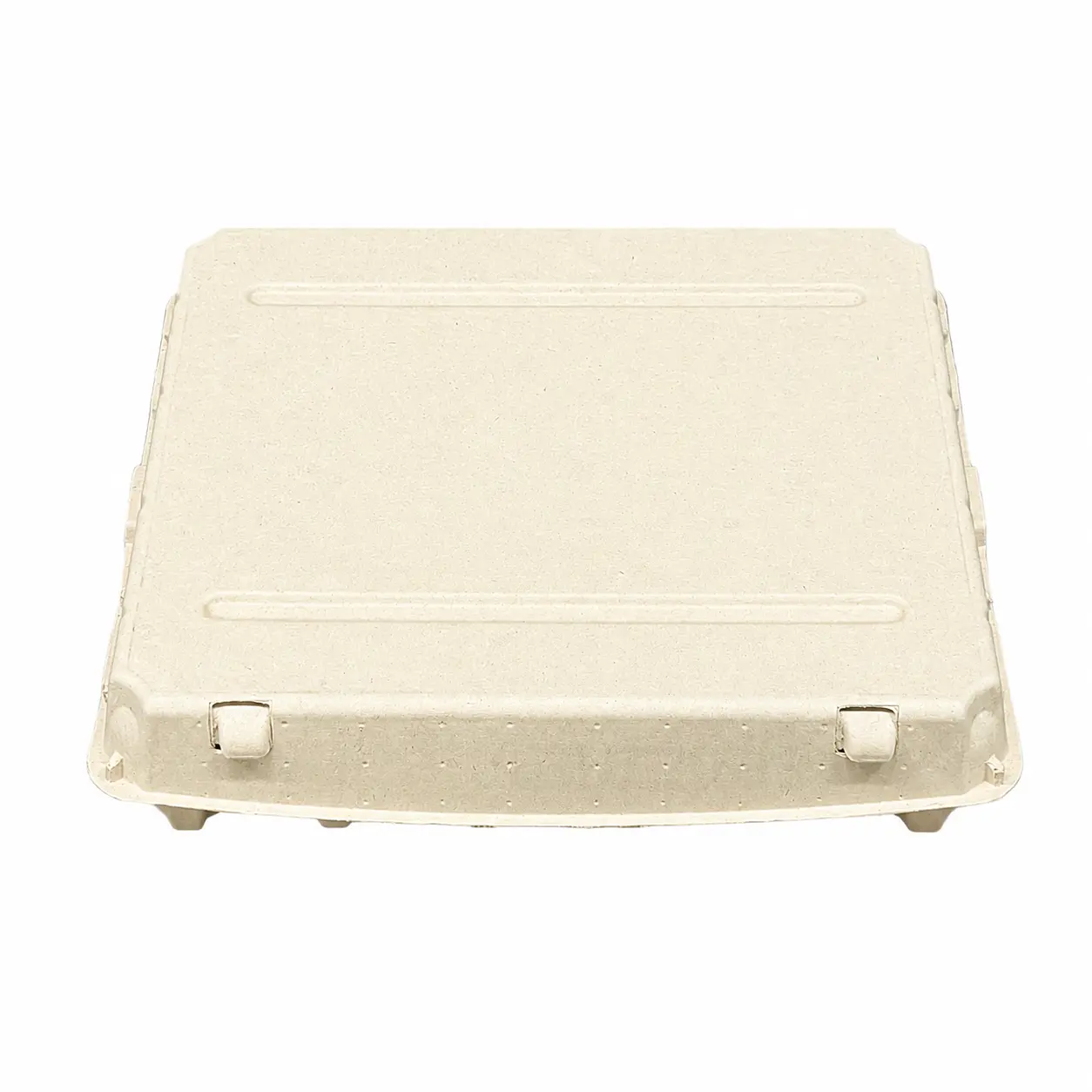
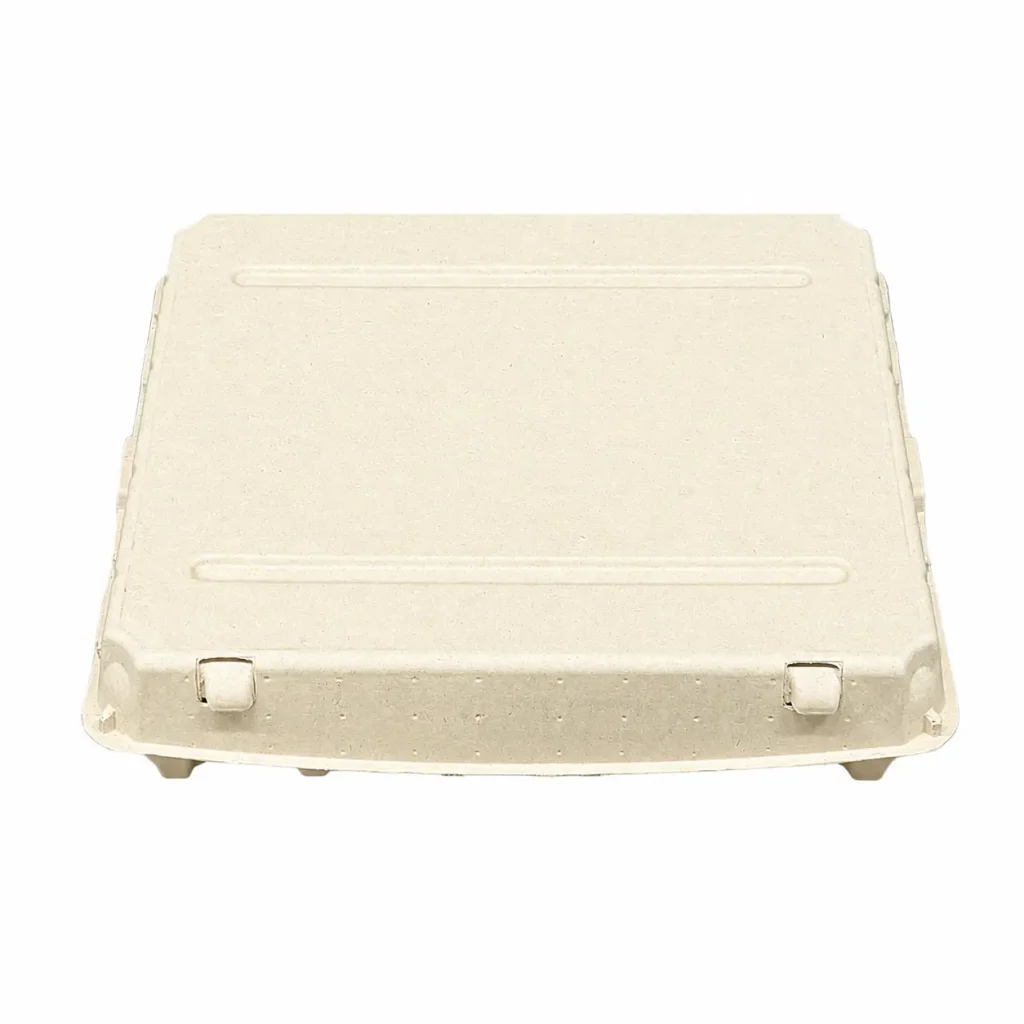
Made from molded pulp fiber, the carton combines an integrated hinged lid, thirty individual egg cells, raised internal dividers, two front locking areas, and a nestable structure. It is suitable for B2B buyers looking for a larger egg packaging format that can support regular farm production, wholesale distribution, foodservice supply, export projects, and repeat bulk orders.
The 30-count molded pulp egg carton is food-contact compliant and supported by relevant testing documentation. The molded pulp carton itself is recyclable, compostable, and plastic-free, while nested carton stacks are packed in thickened transparent PE bags for grouping, storage, and shipment protection.
For additional capacities, buyers can explore our Molded Pulp Egg Cartons category, including 10-count, 12-count, 15-count, and 20-count lidded egg carton options.
Product Specifications
| Product Name | 30-Count Molded Pulp Egg Carton |
| Brand | King Green Pack / KGP |
| Material | Molded pulp fiber |
| Capacity | 30 eggs |
| Cell Layout | 5 rows × 6 egg cells |
| Product Type | Lidded molded pulp egg carton |
| Color | Natural pulp color |
| Application | Egg farms, grading and packing stations, wholesalers, distributors, and bulk egg packaging |
| Main Features | Lidded, stackable, food-contact compliant, recyclable, compostable, plastic-free carton |
| Packing | Nested in stacks and packed in thickened PE bags |
| Dimensions | Available upon request |
| Egg Size Compatibility | Confirmed according to customer requirements |
| Closure Structure | Subject to the selected product model |
| Ventilation Design | Subject to the selected product model |
| Unit Weight | Available upon request |
| Packing Quantity | 50 pcs/PE bag |
| MOQ | Confirmed with the sales team |
| Supply | Wholesale, OEM, ODM, private label, bulk supply |
Key Features of the 30-Count Molded Pulp Egg Carton
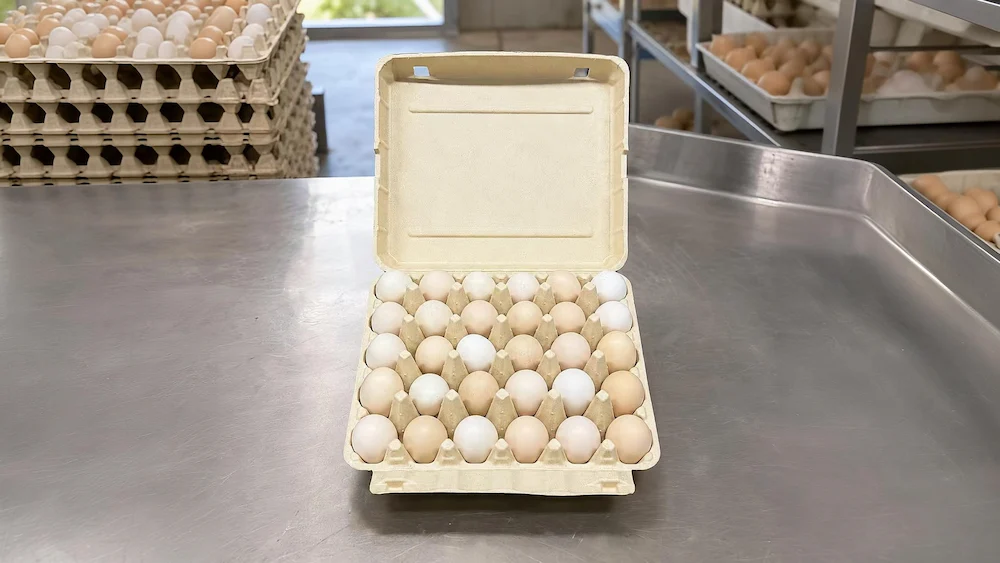
Thirty Individual Egg Compartments
The carton contains thirty molded egg cells arranged in five rows of six. Each compartment separates an individual egg from adjacent eggs and helps maintain an organized packing layout during normal farm handling, warehouse storage, transportation, wholesale distribution, and delivery.
Integrated Large-Capacity Lid
The integrated hinged lid helps enclose thirty eggs within one complete packaging unit. It provides a practical format for commercial egg farms, grading and packing stations, wholesale distribution, institutional food supply, and high-volume egg handling programs.
Closure details, locking performance, and lid alignment may vary according to the selected product model. Buyers should confirm the final carton structure with the KGP sales team before placing a bulk order.
Made from Molded Pulp Fiber
This 30-count molded pulp egg carton is made from molded pulp fiber without emphasizing a specific plant fiber source. Its natural molded fiber surface provides a recognizable pulp packaging appearance suitable for farms, egg processors, distributors, wholesalers, and packaging buyers seeking an alternative to foam or rigid plastic egg packaging.
Five-Row by Six-Cell Structure
The internal structure uses five rows of six molded egg cells to provide thirty separate compartments. Raised dividers help organize individual eggs and reduce direct contact between adjacent eggs during normal packing and handling conditions.
Because egg dimensions and grading systems differ by farm, country, and sales program, buyers should test the selected carton with their actual eggs before confirming mass production or repeat purchasing.
Food-Contact Compliant Egg Packaging
The carton is suitable for egg packaging applications and is supported by relevant food-contact compliance documentation. Specific reports and supporting documents can be confirmed according to the selected product, destination market, and customer requirements.
Any food-contact or regulatory wording used on retail, wholesale, or customer-facing packaging should correspond to the actual documents provided for the order.
Compostable Molded Pulp Carton
The molded pulp carton is compostable. Composting conditions, waste collection systems, labeling requirements, and permitted environmental claims may vary by country or region. Buyers should verify local requirements before using market-specific compostability claims.
Recyclable Egg Carton
The pulp fiber carton is recyclable where appropriate collection and recycling systems are available. Actual recyclability depends on local infrastructure, disposal conditions, contamination levels, and regional waste-management rules.
Plastic-Free Carton Body
The carton body itself is made from molded pulp fiber and does not use foam or rigid plastic as the carton material. Thickened transparent PE bags are used only for grouping and protecting nested carton stacks during warehouse storage, handling, and shipment.
Stackable and Nestable Design
Empty cartons can be nested in stacks before use, helping reduce warehouse space and support organized handling at farms, grading facilities, packaging warehouses, wholesale distribution centers, and export-loading areas.
For B2B buyers, nesting efficiency affects warehouse utilization, handling time, storage planning, PE bag quantity, shipment preparation, and total logistics cost.
Suitable for High-Volume Egg Packaging
The 30-count format is suitable for larger packaging programs that require thirty eggs in one lidded carton. It can support farm distribution, wholesale supply, foodservice channels, institutional buyers, high-volume retailers, and export egg packaging projects.
Compared with smaller-capacity cartons, the 30-count format allows more eggs to be grouped in one unit. Buyers should therefore evaluate filled-carton weight, handling methods, stacking conditions, and transport requirements carefully.
Suitable for B2B Bulk Supply
KGP supplies the 30-count molded pulp egg carton for wholesale orders, OEM projects, ODM cooperation, private label packaging, food packaging distributors, egg farms, processors, and repeat bulk purchasing programs.
Final specifications, packing details, labeling requirements, and shipment arrangements can be coordinated according to the selected model and order requirements.
Common Applications
- Commercial egg farms
- Egg grading and packing stations
- Egg processors and distribution centers
- Egg wholesalers
- Foodservice supply companies
- Institutional food buyers
- Food packaging distributors
- Large-capacity egg packaging programs
- OEM and ODM egg packaging projects
- Private label egg packaging
- Domestic bulk distribution
- Export egg packaging supply
Why Choose a 30-Count Egg Carton?
A thirty-egg carton provides a large-capacity packaging format for farms, wholesalers, distributors, and foodservice programs that need to handle more eggs in one unit. It maintains thirty individual molded compartments while helping reduce the number of separate cartons required for larger orders.
The five-row by six-cell layout provides a clear thirty-egg quantity and an organized internal structure. It is particularly suitable for commercial egg distribution, farm-direct sales, wholesale channels, institutional supply, and packaging programs where larger pack sizes are preferred.
The correct carton should still be selected according to actual egg dimensions, filled-carton weight, lid clearance, closure performance, packing equipment, storage method, stacking conditions, transportation distance, and destination-market requirements.
Buyer Decision Guide
When selecting a 30-count molded pulp egg carton, buyers should evaluate the complete packaging process rather than comparing unit price alone. Important factors include egg fit, cell depth, divider height, carton strength, lid alignment, closure performance, nesting efficiency, filled-carton weight, packing quantity, warehouse conditions, and transportation methods.
Test the Carton with Actual Eggs
Egg sizes and grading standards vary between farms, countries, and product programs. Buyers should test samples using the actual eggs that will be packed. Sample testing helps evaluate egg fit, cell support, divider clearance, lid closing, lock alignment, stacking, and handling performance.
Evaluate Filled-Carton Weight
A 30-count carton contains more eggs than smaller retail cartons. Buyers should therefore evaluate the total filled-carton weight and confirm that workers, conveyors, shelves, pallets, and transport systems can handle the package safely and efficiently.
Review the Packing Process
The carton should be compatible with the buyer’s manual or automated packing workflow. Buyers should check how cartons are separated from nested stacks, filled, inspected, closed, moved through the facility, stored, and prepared for wholesale distribution or shipment.
Check Lid Alignment and Locking Performance
The larger lid and carton body should align properly after filling. Buyers should confirm that the selected egg size does not interfere with lid clearance and that the front locking areas close correctly under actual production conditions.
Confirm Stacking and Transportation Conditions
A filled 30-count egg carton may be exposed to more weight and handling pressure than a smaller pack. Buyers should test stacking height, shelf loading, pallet arrangement, vibration, transport distance, and destination conditions before confirming regular production.
Confirm Branding and Identification Requirements
Wholesale, foodservice, and private label projects may require stickers, labels, paper sleeves, barcodes, batch information, handling instructions, or external PE bag identification. Available branding and labeling options should be confirmed according to the selected model and project quantity.
Confirm Compliance Documents
Food-contact, compostability, and other supporting documents should be reviewed according to the destination market. KGP can coordinate relevant documentation based on the selected product and customer requirements.
Product dimensions, egg-size compatibility, closure details, ventilation design, unit weight, packing quantity, and MOQ can be confirmed with our sales team according to the selected model and order requirements.
Thickened PE Bag Packing
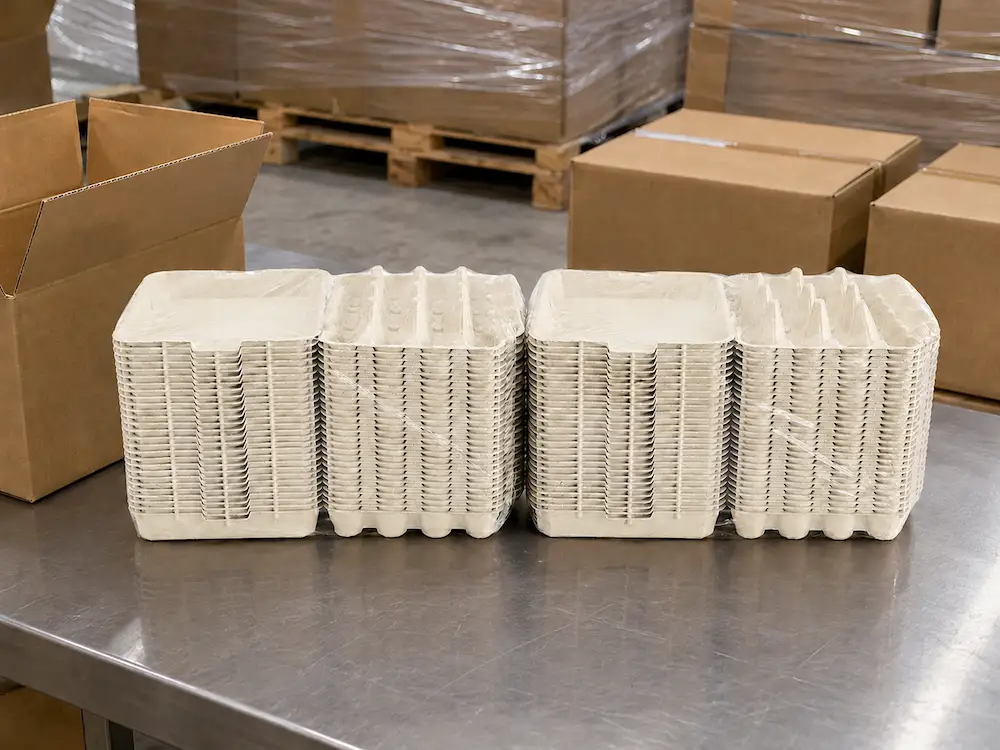
The empty egg cartons are nested in stacks and packed in thickened transparent PE bags. This packing method keeps each stack grouped and provides additional protection against dust and normal warehouse handling during storage and shipment.
The standard packing method for this egg carton series does not require an outer paper carton. Packed PE bags can be prepared for warehouse storage, palletizing, loading, container shipment, or other transport arrangements according to the customer’s order plan.
The number of cartons packed in each PE bag is not fixed on the product page and should be confirmed with the KGP sales team before production.
Before confirming the order, buyers should review:
- Selected 30-count egg carton model
- Required quantity per thickened PE bag
- PE bag thickness or special packing requirements
- Stack height and warehouse storage method
- Palletizing or container-loading arrangement
- External identification or labeling requirements
- Destination market and compliance documentation
- Shipment method and handling conditions
OEM, ODM and Private Label Support
KGP supports B2B buyers who require more than standard bulk supply. Depending on the project, available services may include product selection, sample evaluation, packaging coordination, private label support, labels, paper sleeves, barcodes, PE bag identification, and customized packing arrangements.
- OEM molded pulp egg carton projects
- ODM packaging development
- Private label egg packaging
- Custom labels and barcodes
- Paper sleeve coordination
- External PE bag identification
- Thickened PE bag packing
- Sample testing before bulk production
- Repeat production and long-term supply
Final customization options depend on the selected carton structure, order quantity, branding requirements, destination market, and production feasibility. All final details should be confirmed with the sales team.
Why Choose KGP as Your Egg Carton Supplier?
- Factory supply: Direct support for farms, wholesalers, distributors, packaging buyers, and repeat purchasing programs.
- Multiple capacities: The series includes 10-count, 12-count, 15-count, 20-count, and 30-count lidded egg cartons.
- Molded pulp fiber: Natural molded fiber material for egg packaging applications.
- Food-contact compliance: Relevant supporting documentation is available according to project requirements.
- Compostable and recyclable carton: Suitable for buyers seeking molded pulp packaging options.
- Large-capacity supply: The 30-count carton supports commercial and high-volume egg packaging programs.
- B2B services: Wholesale, OEM, ODM, private label, label, barcode, and sleeve coordination.
- Bulk packing: Nested carton stacks packed in thickened transparent PE bags.
- Sample evaluation: Buyers can test actual eggs and packing workflows before bulk production.
- Order confirmation: Technical specifications and commercial details are confirmed before production.
Common Mistakes When Buying 30-Count Egg Cartons
- Ordering without actual egg testing: Egg dimensions vary, so sample testing should be completed before bulk purchasing.
- Assuming all 30-count cartons are identical: Cell depth, divider height, lid shape, locking structure, and overall dimensions may vary by model.
- Ignoring filled-carton weight: Thirty eggs create a heavier package, so handling, shelving, palletizing, and transportation should be evaluated.
- Only comparing unit price: Carton strength, nesting efficiency, damage rate, warehouse space, and packing method also affect total purchasing value.
- Ignoring lid clearance: Buyers should verify that the selected egg size allows the lid to close and lock correctly.
- Overstacking filled cartons: Excessive stacking pressure may affect eggs or carton performance, so actual stacking conditions should be tested.
- Ignoring storage conditions: Molded pulp cartons should be stored in a clean, dry, and ventilated environment.
- Using unsupported certification wording: Food-contact and compostability claims should correspond to available documentation and destination-market rules.
- Not confirming PE bag quantity: Quantity per bag, stack height, and shipping arrangements should be confirmed before production.
- Using other-capacity artwork or specifications: Labels, descriptions, and product images must clearly correspond to the actual 30-count structure.
FAQ
What is a 30-count molded pulp egg carton?
A 30-count molded pulp egg carton is a lidded pulp fiber package designed to hold thirty eggs in separate molded compartments during packing, storage, handling, transportation, wholesale distribution, and delivery.
How are the thirty egg cells arranged?
The carton shown uses a five-row layout with six egg compartments in each row, providing thirty individual egg cells in total.
What material is the egg carton made from?
The carton is made from molded pulp fiber. The material description does not specify a particular plant fiber source.
Is the 30-count molded pulp egg carton food-contact compliant?
Yes. Relevant food-contact compliance documentation is available. Specific reports can be confirmed according to customer requirements, the selected product model, and the destination market.
Is the egg carton compostable?
Yes. The molded pulp carton is compostable. Local composting systems, disposal conditions, labeling requirements, and environmental marketing rules should be confirmed for the target market.
Is the carton recyclable?
The molded pulp carton is recyclable where suitable collection and recycling systems are available. Buyers should check local recycling requirements before making market-specific claims.
Is the egg carton completely plastic-free?
The egg carton body itself is made from molded pulp fiber and is plastic-free. Thickened transparent PE bags are used for bulk packing and shipment protection.
What egg sizes fit this carton?
Egg-size compatibility should be confirmed using the customer’s actual eggs and the selected carton model. Sample testing is recommended before placing a bulk order.
Is a 30-count egg carton suitable for retail use?
It may be suitable for retail, farm-direct, wholesale, foodservice, or institutional packaging programs depending on local market preferences. Buyers should evaluate filled-carton weight, shelf space, labeling, and customer handling requirements.
How are the cartons packed?
The empty cartons are nested in stacks and packed in thickened transparent PE bags. The standard packing method does not use an outer paper carton.
How many cartons are packed in each PE bag?
The packing quantity is confirmed with the sales team according to the selected model, stack height, order requirements, and shipping arrangement.
Can KGP support OEM or private label orders?
Yes. KGP supports wholesale, OEM, ODM, private label, labels, paper sleeves, barcodes, PE bag identification, and customized packing coordination for B2B buyers.
What is the MOQ?
MOQ is confirmed with the sales team according to the selected carton model, customization requirements, production plan, and order quantity.
Can I request samples before ordering?
Yes. Sample testing is recommended so buyers can evaluate egg fit, lid alignment, locking performance, carton strength, filled-carton weight, stacking, nesting, and packing suitability before confirming a bulk order.